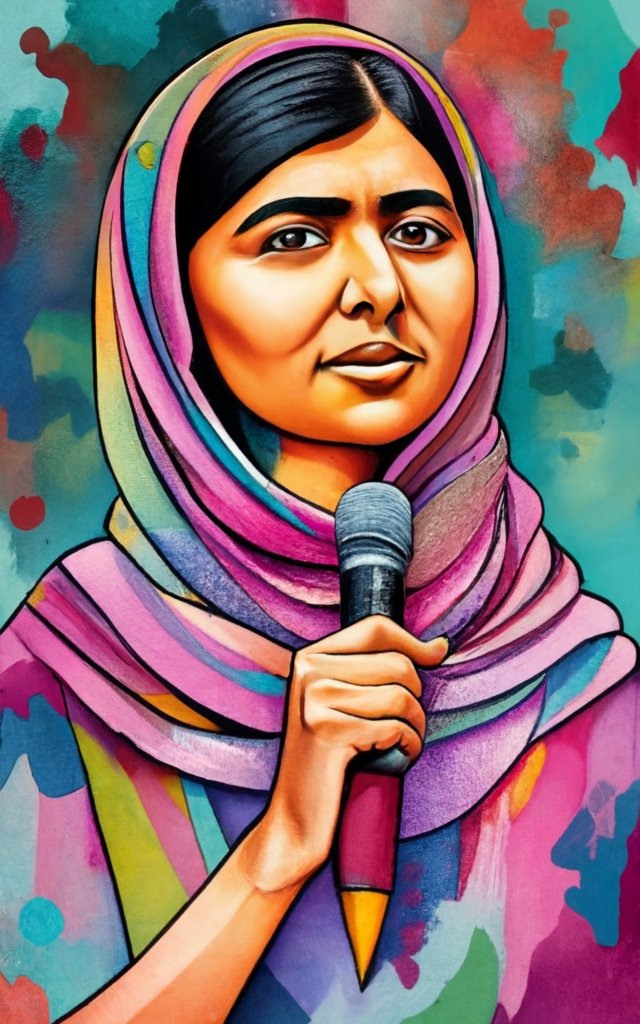
On July 12, 2013, a young Pakistani girl named Malala Yousafzai delivered a remarkable speech at the United Nations headquarters in New York. Her address, often referred to as the “Address to the United Nations, July 2013,” is a testament to the unwavering power of education, resilience, and the metaphor of the “pen” as a formidable weapon for change. Students will understand the significance of Malala’s speech and analyze the metaphor of the “pen” as a potent instrument in her fight for education and women’s rights.
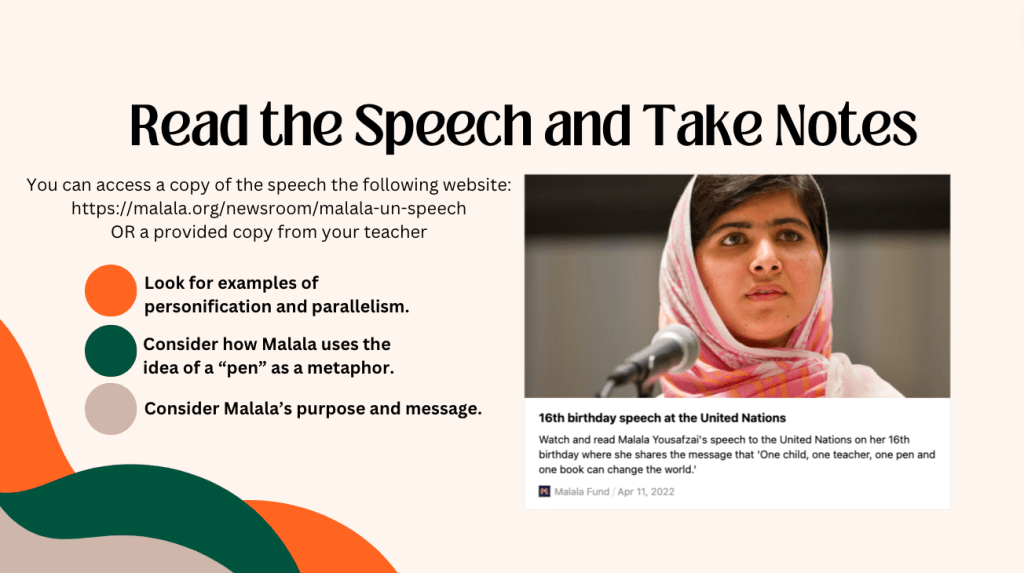
The Importance of Malala’s Speech:
Malala’s address to the United Nations came after surviving a brutal attack by the Taliban in Pakistan, who targeted her for advocating girls’ education. In her speech, she shared her personal story and her unyielding commitment to education and gender equality.
- Global Awareness: Malala’s speech brought global attention to the plight of girls denied access to education and the broader issue of women’s rights in Pakistan and around the world. Her eloquence and courage inspired people worldwide to stand up for the right to education for all.
- Youth Empowerment: Malala’s speech highlighted the importance of empowering young voices. She demonstrated that age should not be a barrier to advocating for change and that young people can have a significant impact on the world.

The Pen as a Weapon:
One of the most compelling elements of Malala’s speech is her metaphorical use of the “pen” as a powerful weapon. Let’s analyze this metaphor:
1. The Pen as a Symbol of Education: Malala states, “One child, one teacher, one book, and one pen can change the world.” Here, the pen symbolizes education, knowledge, and the capacity to effect change through learning. It underscores the transformative potential of education.
2. Nonviolent Resistance: Malala’s choice of the pen as a weapon is significant because it emphasizes the power of nonviolent resistance. She counters the violence of the Taliban with the peaceful strength of education and words. This aligns with her commitment to advocating change through dialogue and education rather than violence.
3. Amplifying Voices: By using the pen as a metaphorical weapon, Malala amplifies the voices of millions of girls and women who are denied access to education. It serves as a universal symbol of resistance against oppression and a call to action for global education initiatives.
Students will write a rhetorical analysis with the guidance of the PETAL writing strategy:

Malala Yousafzai’s “Address to the United Nations, July 2013” is a testament to the enduring power of education, resilience, and the metaphor of the “pen” as a weapon for change. Her speech not only raised global awareness about the importance of education and women’s rights but also inspired a generation to stand up for justice and equality. Malala’s metaphorical use of the pen serves as a reminder that education and knowledge are formidable tools that can break down barriers, empower individuals, and change the world for the better. Her story and words continue to inspire and shape the future of education and activism worldwide.




 Core Basic Literacy
Leave a comment