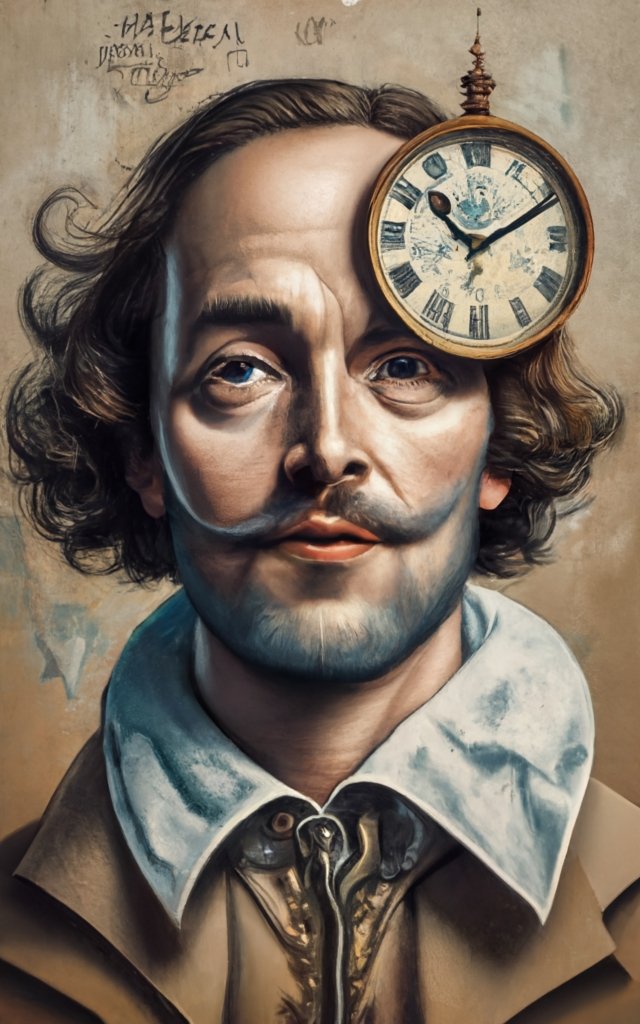
William Shakespeare, the master of words and emotions, often explored the theme of time in his sonnets. Within these verses, time takes on a persona, becoming a central character in its own right. As we delve into the personification of time in Shakespeare’s sonnets, we’ll also uncover the intertwined themes of beauty, age, and youth that add depth and poignancy to his poetic reflections.
In several of his sonnets, Shakespeare personifies time as an active and relentless force. Time becomes an agent, capable of bestowing and taking away, much like a living being. In Sonnet 19, he implores, “O, carve not with thy hours my love’s fair brow,” treating time as a sculptor whose passage leaves marks on the object of affection. This personification allows Shakespeare to explore the impact of time on beauty, youth, and love.
https://www.teacherspayteachers.com/Product/Personification-of-Time-Shakespearean-Sonnets-10176851
One of the recurring themes in Shakespeare’s sonnets is the ephemeral nature of beauty. Youth and beauty are portrayed as fleeting gifts, vulnerable to the ravages of time. The poet often mourns the loss of beauty as it succumbs to age, as seen in Sonnet 12, “And see the brave day sunk in hideous night.” Here, time is depicted as a thief, stealing the brilliance of youth and plunging it into darkness.

Youth, on the other hand, is celebrated as a time of vitality, potential, and boundless energy. Shakespeare often uses personification to breathe life into youth, emphasizing its virtues. In Sonnet 60, he writes, “Like as the waves make towards the pebbled shore,” portraying youth as a force of nature, like the inexorable movement of waves. This vivid imagery enhances the contrast between the vibrancy of youth and the inevitability of time’s passage.

While youth and beauty are celebrated, Shakespeare also acknowledges the value of age and the wisdom that comes with it. In Sonnet 30, he finds solace in memories, noting that “When to the sessions of sweet silent thought / I summon up remembrance of things past.” Here, time’s passage is seen as an opportunity for reflection and the accumulation of experiences that enrich one’s life.

In Shakespeare’s sonnets, the personification of time adds depth and complexity to his exploration of beauty, age, and youth. Through vivid imagery and emotional resonance, he captures the essence of the human experience—the relentless march of time, the transience of beauty, the vitality of youth, and the wisdom that accompanies age. These themes continue to resonate with readers across the centuries, making Shakespeare’s sonnets a timeless treasure trove of poetic insight.
Personification of time is a literary device often used in other famous poems, besides sonnets, to give time human-like qualities or attributes. Here are examples of famous poems where time is personified that you can use with your students to study this literary technique:
- “To His Coy Mistress” by Andrew Marvell: In this metaphysical poem, the speaker personifies time as a relentless force, urging his beloved to seize the moment before time’s inevitable passage.Example: “Time’s winged chariot hurrying near.”
- “Ode on a Grecian Urn” by John Keats: Keats personifies the urn, which bears images frozen in time, as a historian or storyteller. In doing so, he indirectly personifies time as the one who keeps these scenes eternal.Example: “Thou still unravish’d bride of quietness, / Thou foster-child of Silence and slow Time.”
- “The Love Song of J. Alfred Prufrock” by T.S. Eliot: In this modernist poem, time is personified as a force that measures out a life of hesitation and self-doubt.Example: “I have measured out my life with coffee spoons.”
- “To the Virgins, to Make Much of Time” by Robert Herrick: The poem advises young women to seize the moment, using the image of time as a person moving swiftly.Example: “Gather ye rosebuds while ye may, / Old Time is still a-flying.”
- “The Garden” by Andrew Marvell: In this poem, time is portrayed as a gardener who trims and prunes the garden of life, emphasizing the fleeting nature of youth and beauty.Example: “The glorious lamp of heaven, the sun, / The higher he’s a-getting, / The sooner will his race be run.”




 Core Basic Literacy
Leave a comment