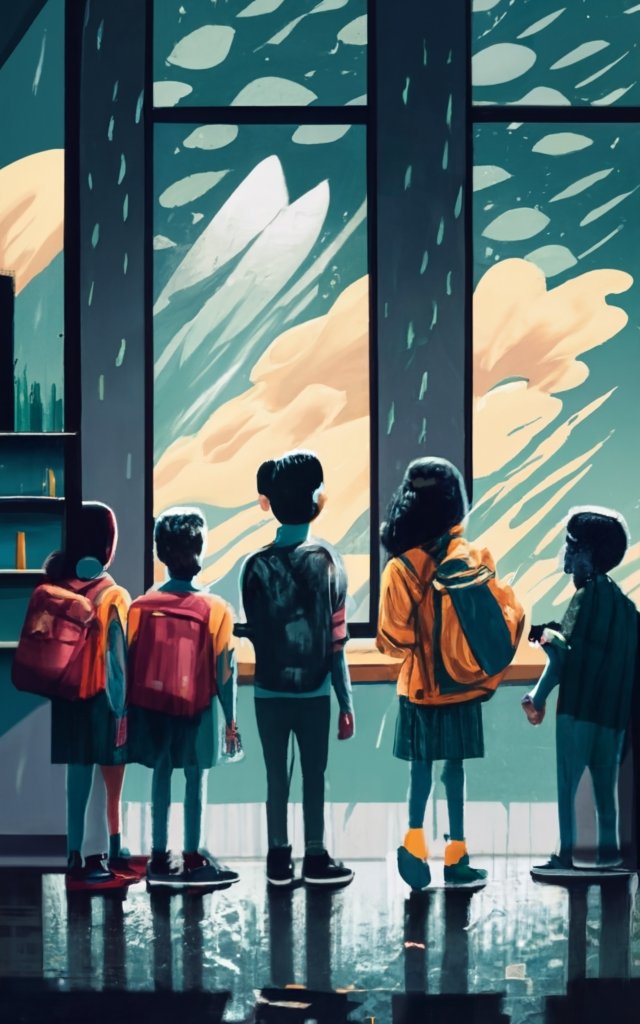
Ray Bradbury, renowned for his masterful storytelling in the realms of science fiction and fantasy, delves into the dystopian genre with his hauntingly beautiful short story, “All Summer in a Day.” Though this story is often a staple in middle school curriculums, it is far from a simple tale of children waiting for the sun to shine. Instead, it presents us with a microcosm of a dystopian world that encapsulates the dark underbelly of human nature, societal oppression, and the harsh consequences of isolation.

https://www.teacherspayteachers.com/Product/All-Summer-in-a-Day-Dystopian-Story-Analysis-10349931
Dystopian Venus:
At first glance, the story’s setting on the rain-soaked Venus, where the sun shines for just a few hours every seven years, appears as a fantastical backdrop. However, it serves as a mirror reflecting dystopian elements that bear a striking resemblance to some of our own world’s grim realities. In this dystopian world, Bradbury illustrates how the withholding of something as basic as sunlight can bring about a sense of despair and longing that’s far too familiar in our own world.
Isolation and Oppression:
Dystopian settings often rely on isolation as a tool for control, and “All Summer in a Day” is no different. The children in the story are isolated from the sun, locked in gloomy classrooms, and their only knowledge of the world beyond is obtained through textbooks. Their isolation fosters a sense of ignorance and vulnerability, highlighting how oppression can be perpetuated through isolation.
Societal Norms and Cruelty:
One of the most dystopian aspects of the story is the cruelty of the children towards Margot, who remembers the sun and longs for it more than anyone else. The group’s collective desire for sunlight and their collective cruelty towards an individual who is different is a chilling reflection of how societal norms and peer pressure can lead to inhumanity and conformity.
Emotional Impact and Psychological Scars:
The story explores the psychological effects of isolation, longing, and cruelty. Margot’s emotional scars are palpable, and the sudden outpouring of sunlight serves as a catalyst for her to show the depth of her pain. This emotional intensity mirrors the dystopian theme of emotional repression and its eventual eruption.
The Power of Short Stories:
Ray Bradbury’s ability to pack such dystopian complexity into a short story is a testament to his skill as a storyteller. The brevity of “All Summer in a Day” underscores the idea that even the shortest narratives can delve deeply into dystopian themes, illuminating the dark corners of human existence and society.
The Tale of Lost Sunlight:
In “All Summer in a Day,” Ray Bradbury has crafted a tale of lost sunlight that resonates as a poignant microcosm of a dystopian world. The story’s dystopian elements, from isolation and oppression to cruelty and emotional scars, serve as a stark reminder of the complex shadows that often lurk behind the most innocent of childhood experiences. It challenges us to contemplate our own world’s injustices and the consequences of isolation and cruelty, inviting readers to seek a future where such darkness may be replaced by the warmth of sunlight and empathy.




 Core Basic Literacy
Leave a comment